My Tips for the TAJP - Part 2
- March 1, 2020
Did you enjoy my stories from the HOP! Tour 2018? So here are my tips for tourists — so you can become one too! This series continues with the selection process.
Tip #1: Training
It’s always a good idea to improve your piloting skills before attempting the selection navigation. Here’s the expected piloting performance during the young pilot selection:
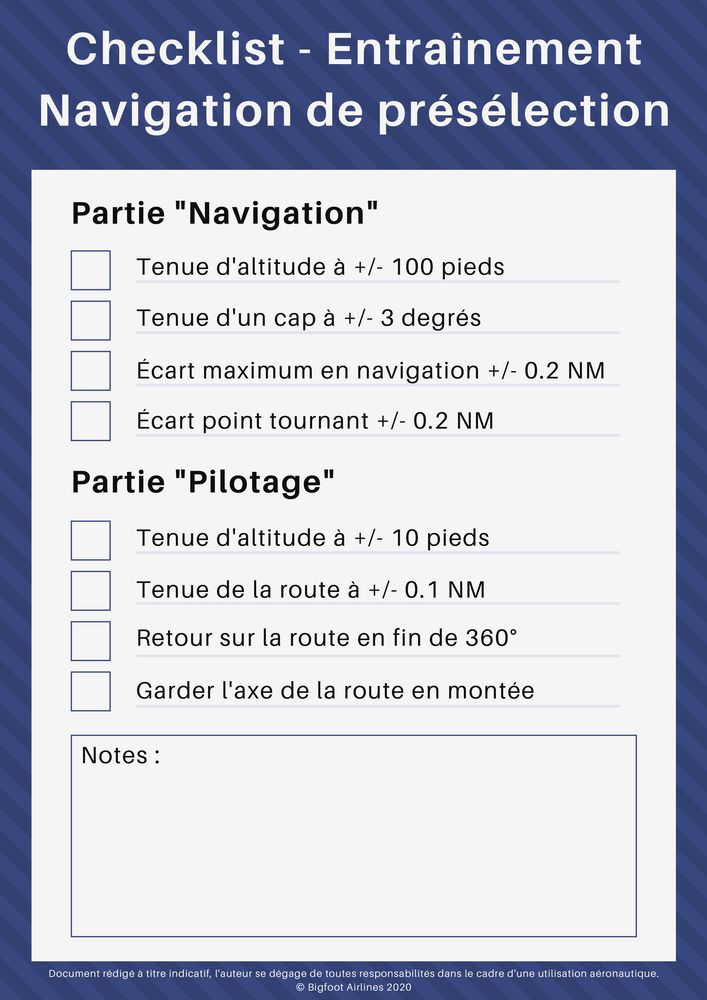
- Maintaining altitude within +/- 100 feet
- Deviation from the navigation corridor less than 0.2 Nm (approximately 370 meters)
- Passing the turning points within 0.2 Nm of the designated point
A short flight around the airfield, recording the flight path with a GPS, will help you assess your level and identify areas for improvement. Don’t hesitate to ask your instructors for their expert advice.
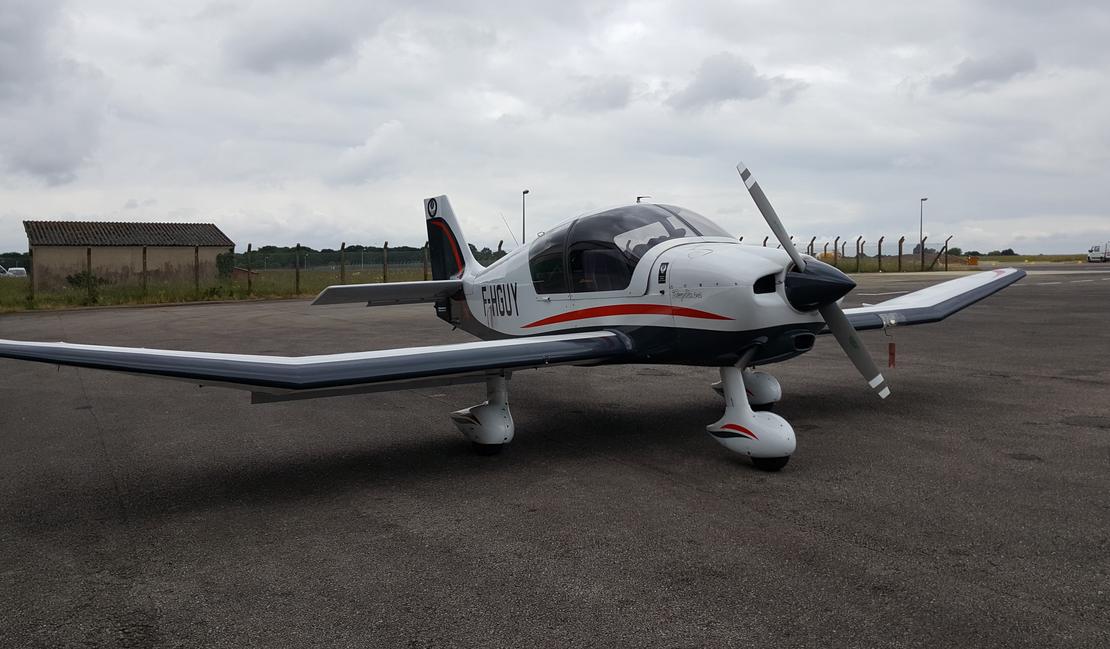
Note that the radius of a 30° turn for a DR400 is approximately 440 meters, so be careful when passing the turning points!
Tip #2: Pre-selection Navigation
Of course, it’s necessary to follow the official selection regulations. The points below are provided for informational purposes only:
Is the weather above my personal minimums? For me, I chose a cloud base above 3000 feet, wind below 15 knots, and feeling well! Did I pack all my flight equipment, including the FFA GPS (with batteries installed)? Did I send the email to the FFA before starting the flight (see page 11 of the regulations)? I turn on the FFA GPS before the pre-flight check and turn it off when the plane is parked. The “piloting quality” segment lasts 9 minutes and begins at the 8th point of the navigation. This test involves performing basic VFR piloting maneuvers.
- Altitude is within +/- 10 feet.
- The width of the corridor is 0.2 Nm.
- The route to follow is the same as defined during the first minute of flight.
- The entire test should ideally be performed with headwind.
Test Procedure:
- The test begins at the 8th point, at an altitude between 1000 and 1500 feet. Start a stopwatch.
- The first minute is a level flight at a constant altitude and heading.
- At t=1 minute, perform a 360° turn to the left with a turn rate greater than or equal to the standard rate. You have 2 minutes to complete this turn, return to level flight on the same heading, and wait for the second turn.
- At t=3 minutes, perform a 360° turn to the right with a turn rate greater than or equal to the standard rate. You have 2 minutes to complete this turn and return to level flight on the same heading.
- At t=5 minutes, fly in level flight at a constant altitude and heading for 1 minute.
- At t=6 minutes, begin a climb of 1000 feet, in a maximum of 2 minutes, relative to the initial altitude recorded at the 8th point. You must maintain a rate of climb of at least 500 feet/minute.
- At t=8 minutes, fly in level flight at a constant altitude and heading for 1 minute.
- At t=9 minutes, the test is complete, but I recommend continuing the flight in level flight for at least 1 minute, in case the stopwatch was started a few seconds before reaching the 8th point.
The navigation must be completed within two months of receiving the GPS.
Tip #3: The Selection in Paris
It takes place at the CREPS Ile-de-France. Over the course of these few days, participants will take part in selection tests, receive detailed information about the TAJP, undergo filmed interviews, and other surprises…
Candidates will be evaluated based on their answers to the “PPL-type” theoretical exam, their preparation for the TAJP flights, and their behavior and communication skills. Don’t hesitate to review my selection experience from the HOP! Tour 2018 here. A young pilot is expected to:
Be able to explain what an aero club is, what the CRA is, how to become a pilot, the different federations, the BIA, the EASA, and any other questions about aviation in general. Have up-to-date theoretical knowledge at a “PPL plus” level. The website “Chez Gligi” allows you to assess your level, but don’t cram! Demonstrate a team spirit that respects the values of French aviation.
Conclusion
With all these tips, the selection process will be just a formality and will reveal the level of commitment you are capable of demonstrating during the Tour.
You can find all my quick reference guides in the bookstore here.