Flight in Formation
- February 17, 2019
On this sunny Sunday, the aerial patrol flights are resuming at Acriv. But before boarding the aircraft, our instructors Michel and Jean-Claude will explain the maneuvers to be performed. The program includes tight formation flying, wing repositioning, dispersal/regrouping, safety procedures, and the three key elements of patrol piloting: ‘staging-retraction-spacing’
Briefing
Why a briefing? A tight formation involves bringing two or more aircraft close together in flight. As the risk level increases, it’s necessary to implement strict procedures to avoid any incidents or accidents. Therefore, each flight is preceded by a preparation session allowing crew members to coordinate their actions. We define parameters to be followed, such as ascent speeds (145 km/h) and cruising speed (160 km/h), an altitude of 2000 feet, turning rates, and the direction of turn after takeoff.
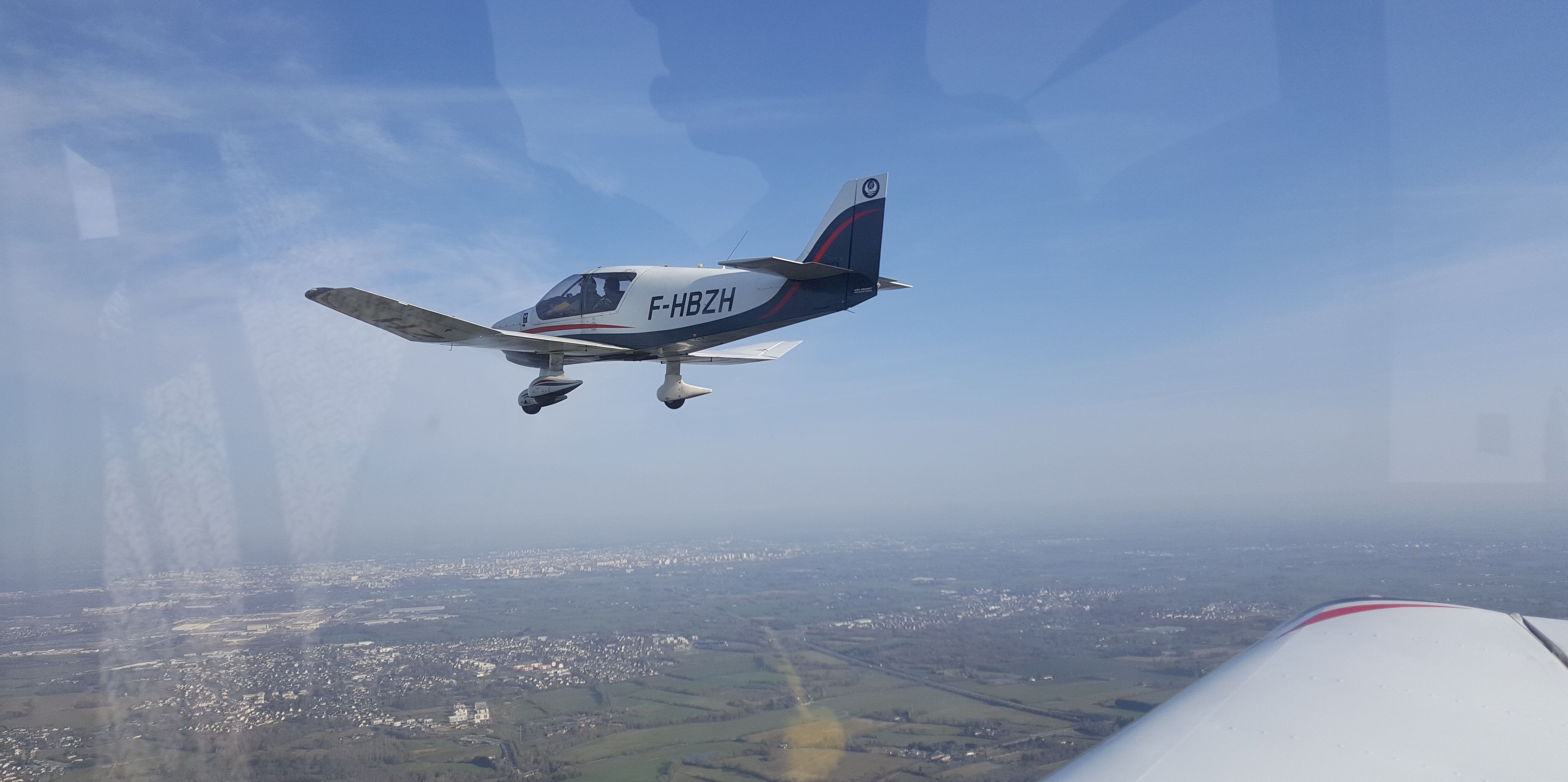
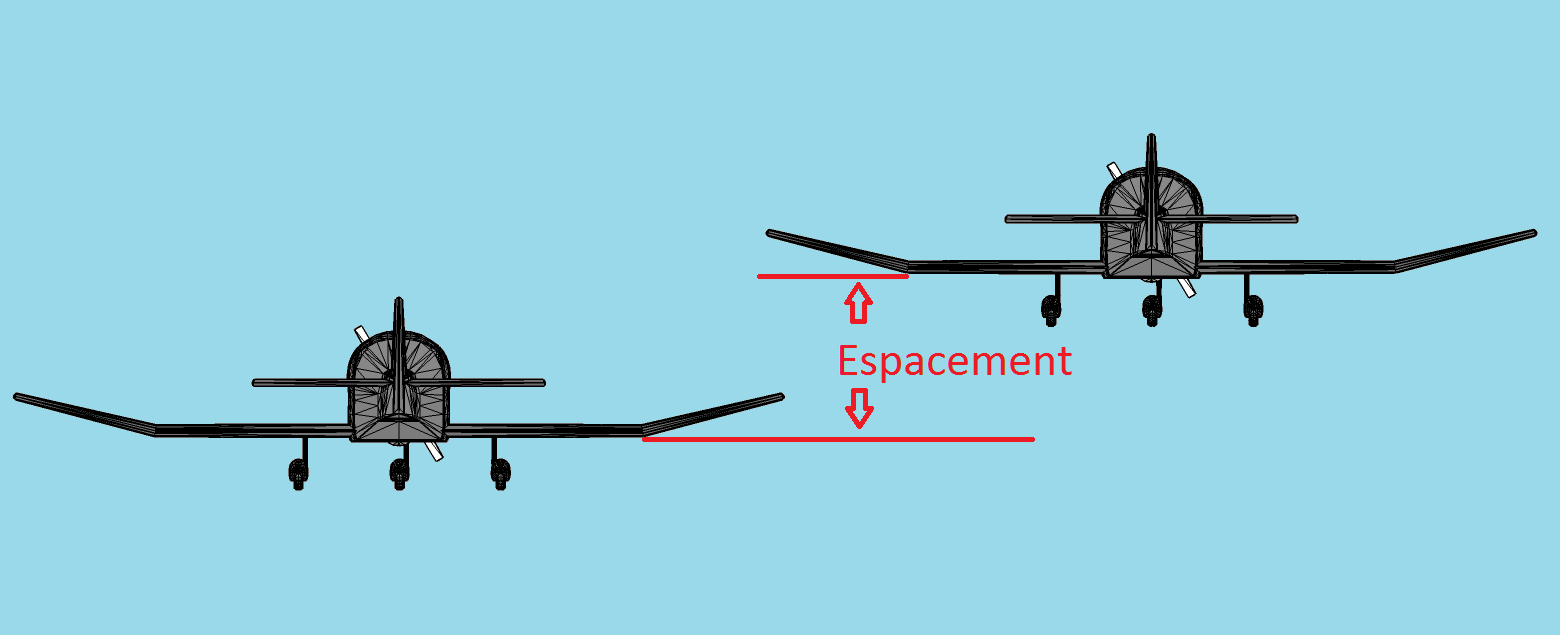
Formation flying can be expressed with three key words: staging, retraction, and spacing. Staging refers to the vertical distance between the two aircraft. The wingman must always remain below the leader, so they can pass underneath if necessary. To maintain orientation, we need to see both the upper (extrados) and lower (intrados) surfaces of the wing relative to the trailing edge.
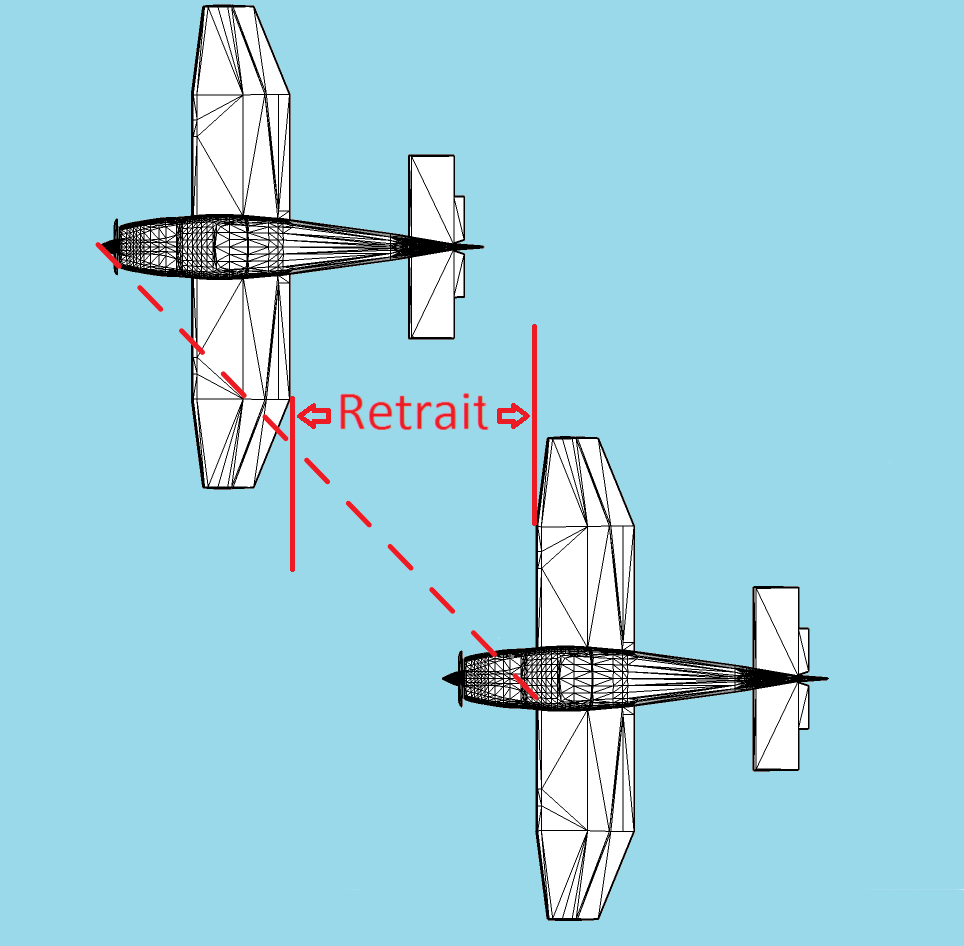
Retraction is the distance by which the wingman trails behind the leader. On the DR400, this corresponds to aligning the wingtip of the leader’s aileron with the leader’s propeller cone (indicated by dotted lines in the diagram). Fine adjustments to the throttle are needed to maintain this reference point.
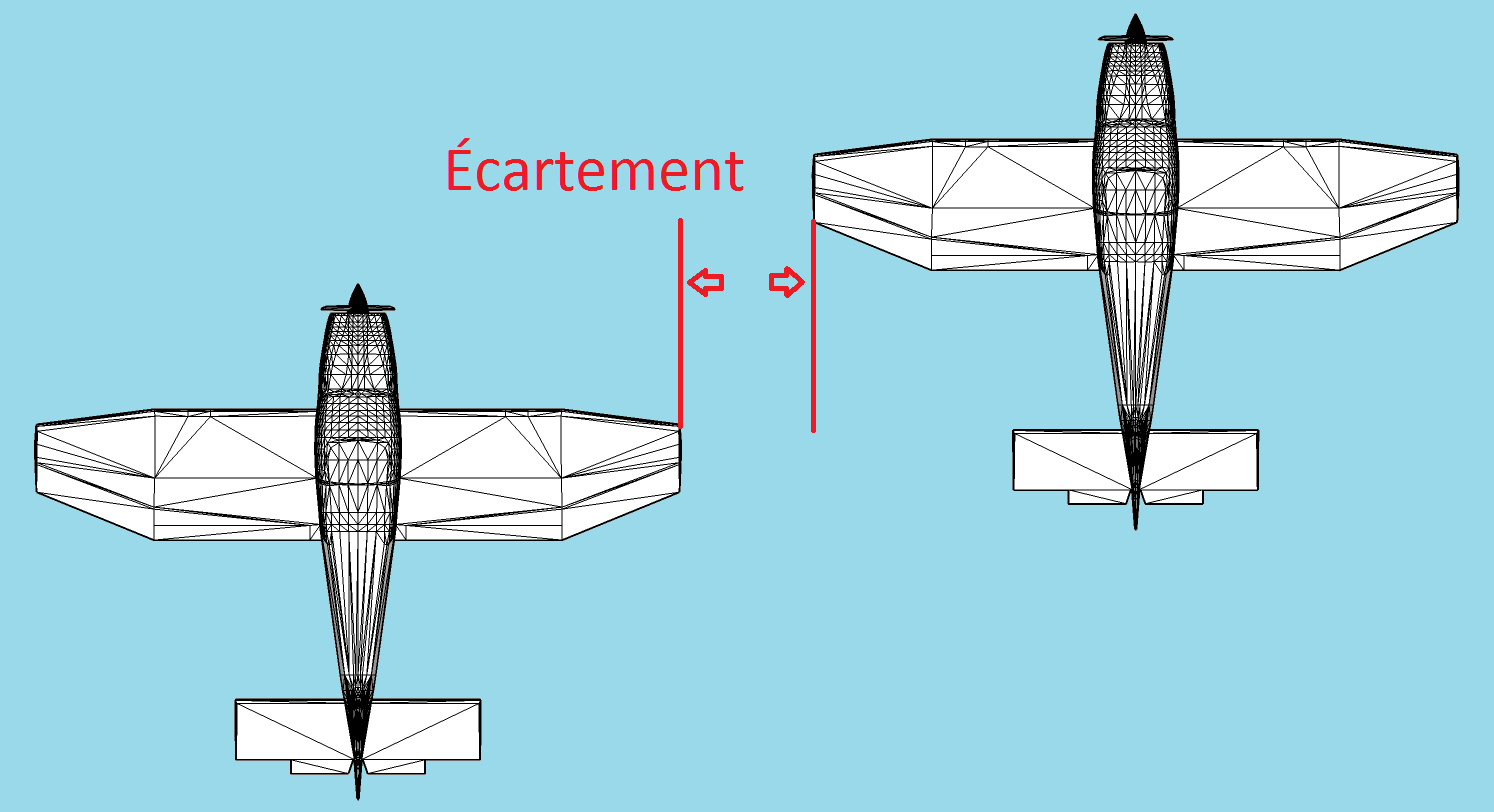
Spacing is the final stage of a tight formation. It’s the distance separating the wingman from their leader, approximately 2 meters, but this can vary depending on weather conditions and the pilot’s experience!
A wing change is a maneuver that allows the wingman to pass either to the right or left of the leader. It involves several steps: reducing power while increasing the spacing and altitude, altering course by 10 degrees, and powering up the engine (to avoid losing sight of the leader!), aligning the aircraft, and returning to the tight formation. Easier said than done! You can see this maneuver at 3'05 in the YouTube video.
When the formation flies over the terrain directly overhead, the leader performs a break – a turn with a 30-degree bank angle – to create distance between the aircraft so they can land one after the other. From the ground, this is quite spectacular as aircraft flying side by side suddenly appear hundreds of meters apart. (3'35 in the video)
Flight Report
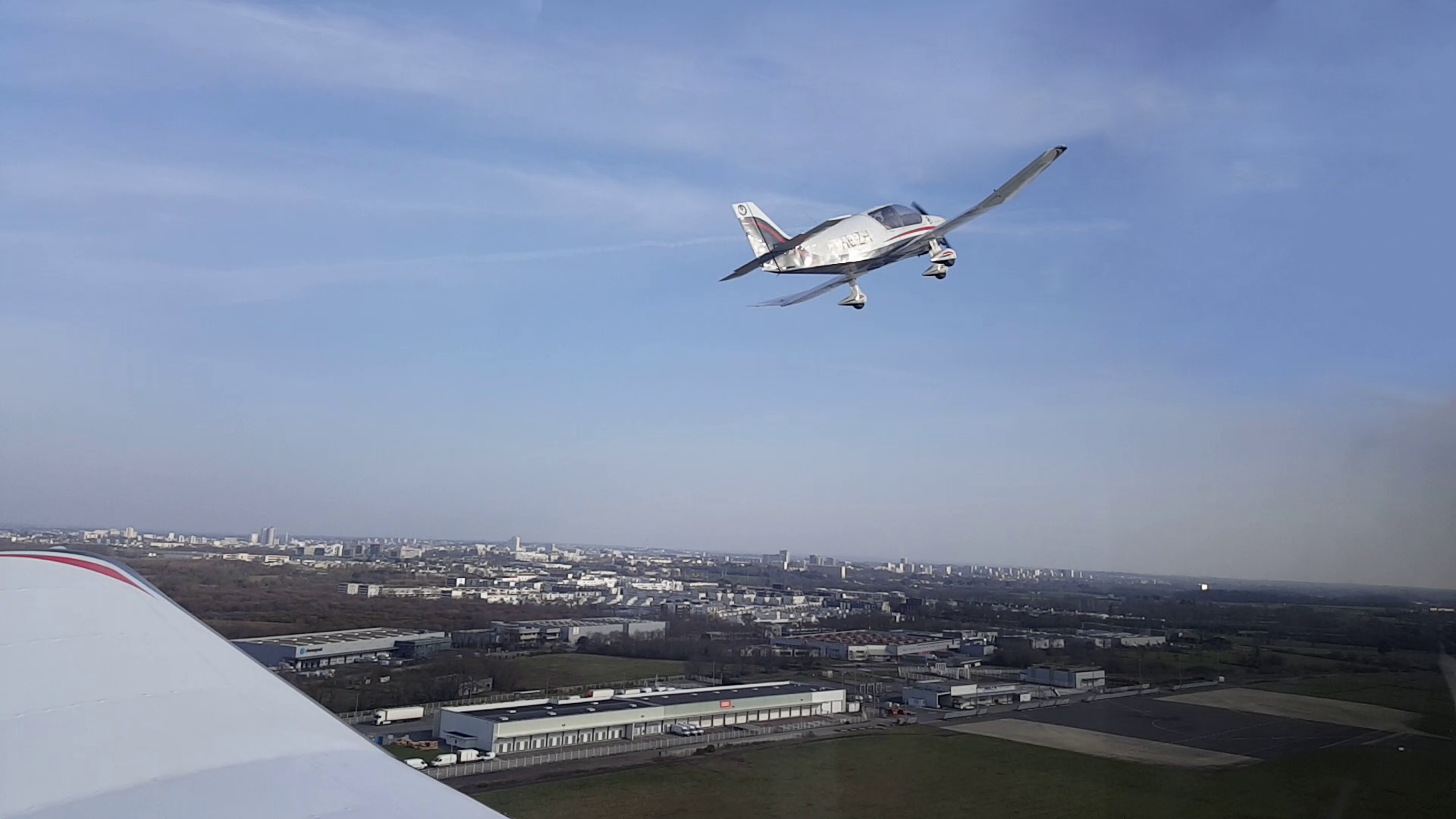
After the briefing, we head to the aircraft. Two sessions are planned; I’ll be piloting during the second one. So, for this first session, I’m a passenger, which is perfect for getting into the atmosphere! I settle in at the rear of the DR400 after conducting a pre-flight check with Dominique, the pilot for this flight. The Lycoming O-235 engines are started up. Once they reach their operating temperature, Jean-Claude informs air traffic control that we’re rolling towards the hold point D10.
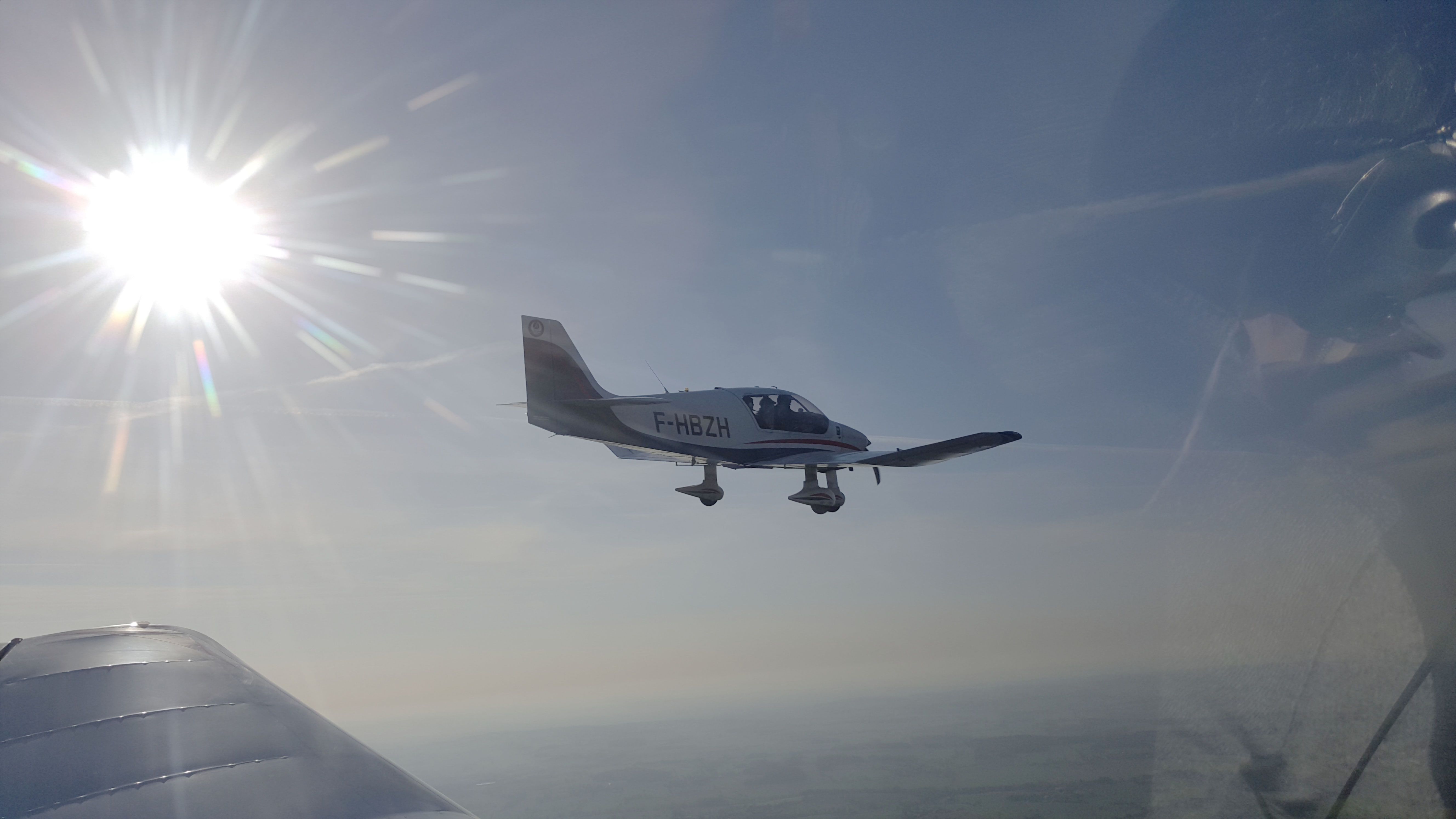
We take off and climb to 2000 feet, with the wingman following a few meters behind. Jean-Claude explains each specific maneuver for formation flying, first as leader and then as wingman. Turns, splits, rejoins, and breaks – nothing is now a secret to me. We return to Rennes and land at the commercial parking area to swap pilots.
It’s my turn now. The engine is restarted, and we roll towards hold point D10. After confirming that each aircraft’s engines are running properly, I align myself on the left side of the runway while the wingman rolls out on the right side. Full throttle, a head nod to signal departure. At that signal, the wingman releases the brakes and takes off after three seconds. We climb to 145 km/h and turn to the right with a very slight bank angle because the wingman is about ten meters behind us!
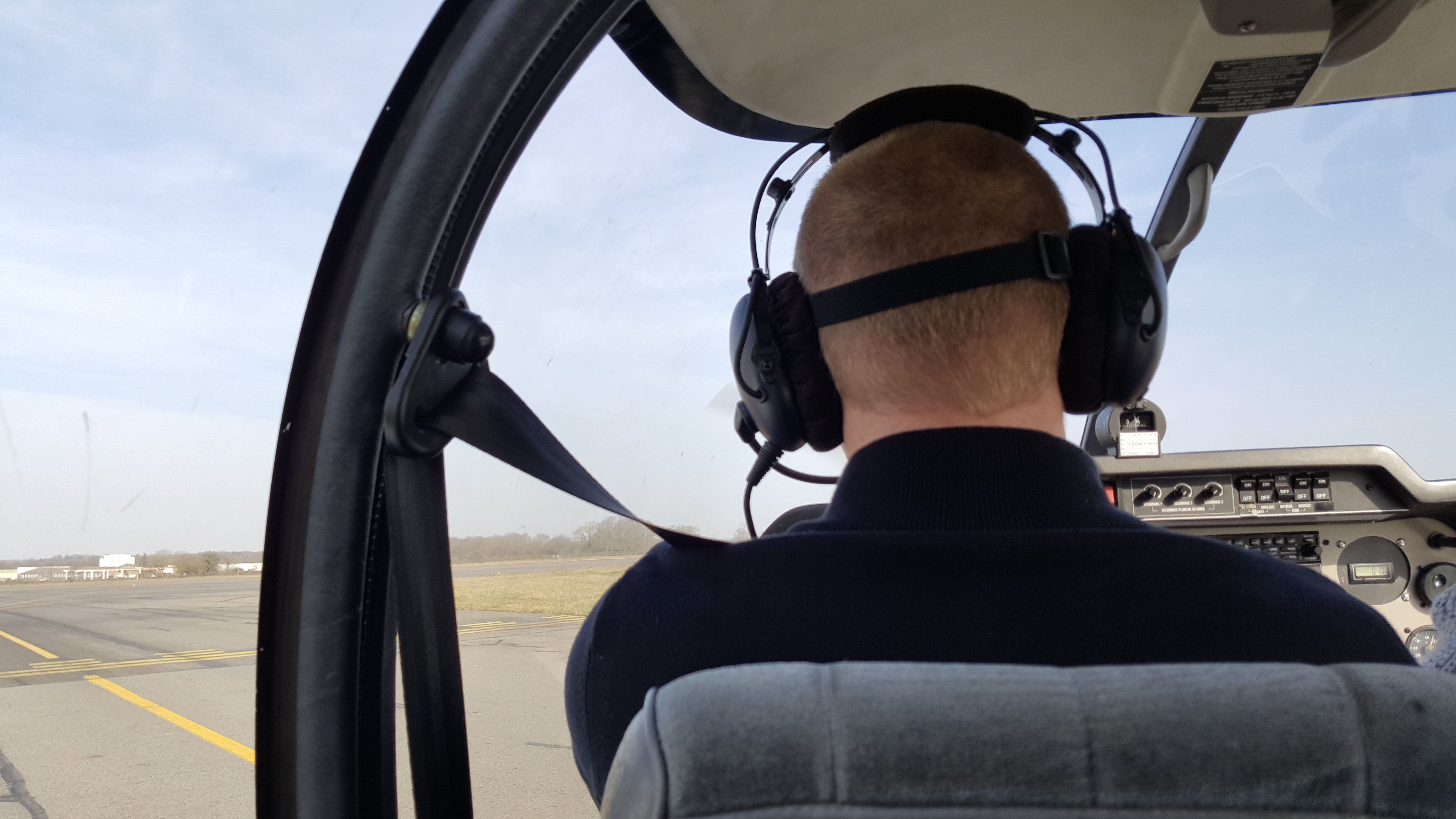
Once stabilized at 2000 feet, I focus on maintaining my altitude, speed, and heading as precisely as possible as the leader. This makes it easier for the wingman to follow. After a few exercises, Jean-Claude slaps his forehead – the signal to switch leaders! The wingman accelerates and passes in front of me. Now, it’s my turn to follow. Corrections with the throttle, yoke, and rudder pedals are constant, so I quickly start feeling tired. I attempt a wing change, but my lack of experience causes me to drift about twenty meters away from the leader. That’s far from the standard of the Patrouille de France! After a few attempts, I’m getting there.
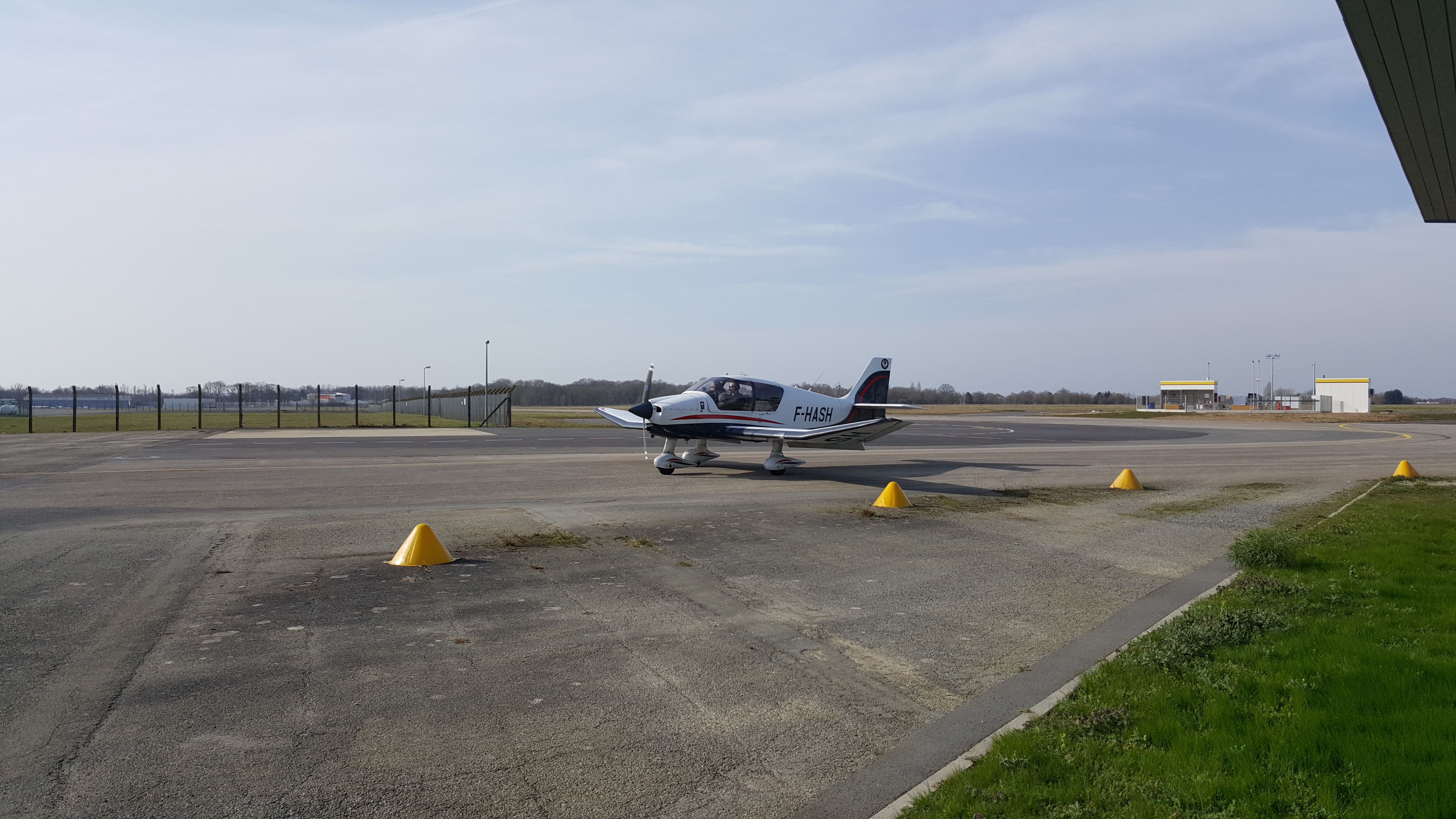
For this first session, I flew a quarter of an hour as leader and the same amount of time as wingman. Both positions are equally challenging: the leader has to think about everything, while the wingman constantly monitors the leader. It was a pleasant morning where we enjoyed flying together thanks to the expertise of our two instructors.