Back to the flight stick
- February 21, 2021
While my flight hours for 2020 ended shortly after obtaining my night flight qualification, I hope 2021 will allow me to fill my flight log a bit more! So, I’m happy to be back in the pilot’s seat this weekend with Patrick, the instructor who trained me for my Private Pilot License (PPL). And to make things even more interesting, a cold front is bringing some turbulence…
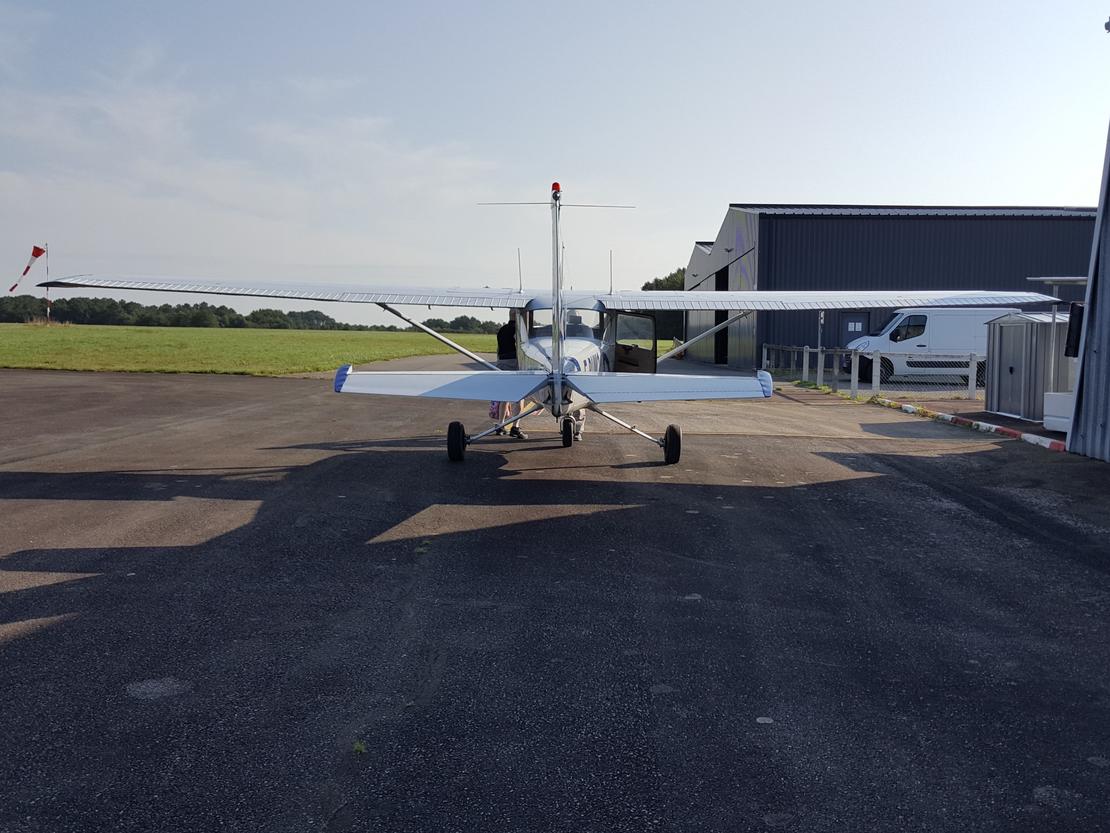
Let’s take a look at the aircraft logbook for the F-BUMC, the Cessna 150 from the Redonnais flying club, to check the remaining range. Everything is in order, I grab the keys and head to the hangar. Pre-flight inspection with the checklist, and of course, disinfecting all the touched surfaces, a new precaution due to COVID-19. At least the planes stay clean! Patrick helps me get the aircraft out, and we get settled inside. Engine start checklist, engine start. Radio call for taxi instructions, and we start moving, although not too far, as the holding point is only 10 meters away! Engine checks are successful, and we taxi onto runway 22.
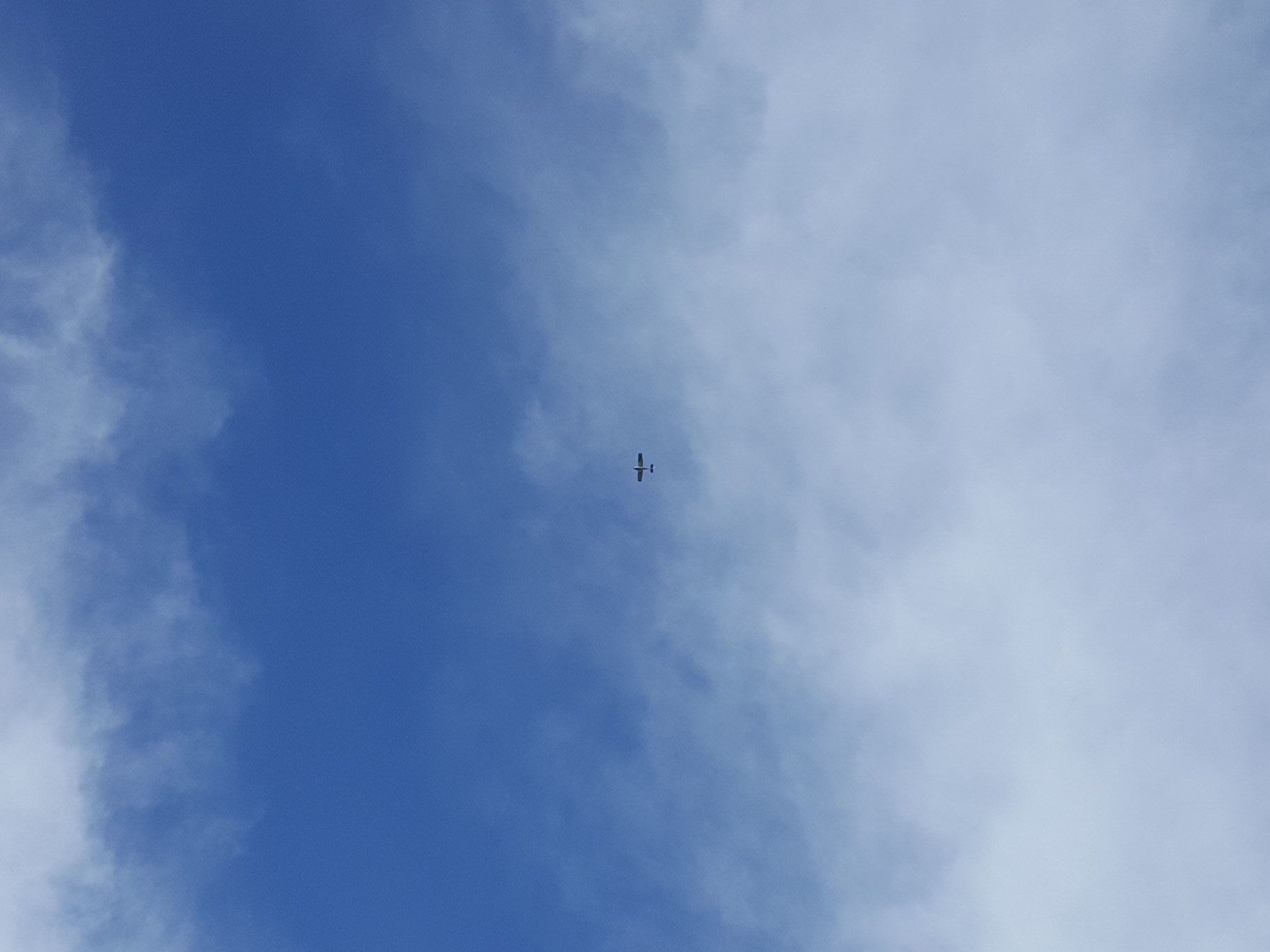
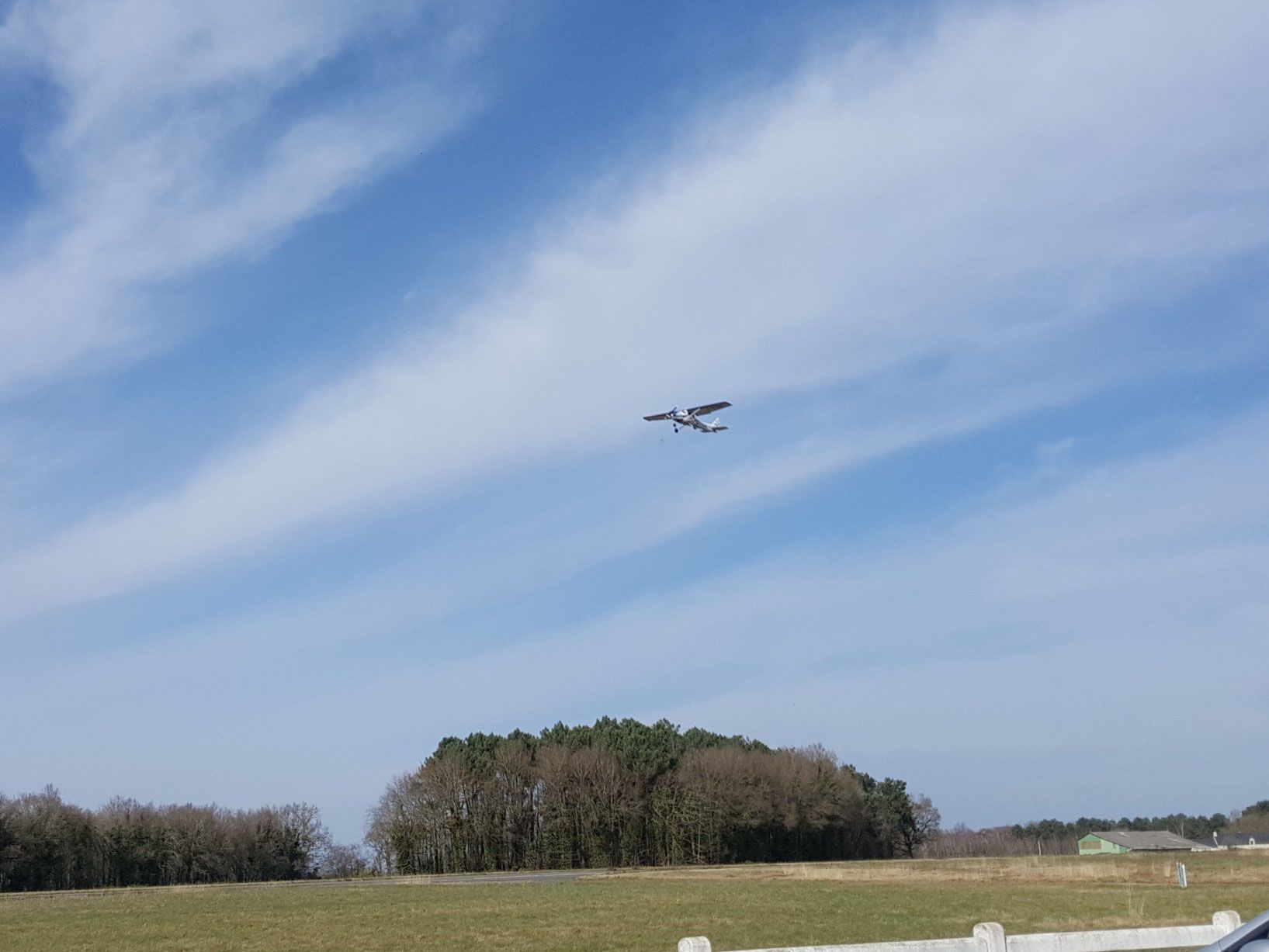
Aligned with the runway threshold, radio call, full throttle. I let the aircraft accelerate slightly beyond its takeoff speed and firmly pull back on the yoke. The aircraft aligns with the crosswind and continues its climb. At 2000 feet, we level off and begin the maneuvering exercises. Climbing turns, followed by descending turns, a stall entry exercise at 3000 feet, and then a return to the airfield. The return takes longer than expected because our ground speed varies between 20 and 40 knots due to the strong headwind. Once over the field, I check the windsock. It’s still runway 22, but the wind, from the southwest, is fluctuating between 15 and 20 knots, with gusts up to 30 knots. The landing is going to be challenging!
We enter the traffic pattern on the right-hand side. I delay the final turn, as the wind tends to reduce the turning radius. We’re getting quite shaken up on final approach due to the wind gradient from the proximity to the ground, and I’m trying my best to stay lined up with runway, with the correct approach slope, and airspeed. But just before reaching the runway threshold, the anemometer registers nearly 100 MPH (160 km/h), well above the recommended 75 MPH (120 km/h). I add power for another attempt. This second attempt goes better, and I perform a go-around after a toouched down. We climb back to 2000 feet above the airfield for a simulated engine failure exercise. And since engine failures can happen at any time, Patrick reduces the power during the climbing. The strong headwind forces us to deviate from the runway and ultimately simulate a landing in a field near the airfield. We add power to return to the runway, land, and taxi back to the parking area. What a session!