Aircraft Maintenance Training
- July 7, 2018
The 500-hour major inspection has arrived for the F-HASH. This is the ideal time to examine the aircraft more closely! Before starting the maintenance, we need to print out the aircraft’s maintenance schedule – a sort of checklist detailing all the items that need to be checked. I am under the supervision of Yves-Noël, who explains and shows me the various points to inspect.
We begin by checking the cylinder compression. A value that is too low would indicate deterioration in the cylinders and potentially a loss of power. Everything appears to be fine; we adjusted the valve clearances on one of the cylinders, while the others are OK. We also checked the air intake box, the tightening clamps, and the heat exchanger. We purged the carburetor and electric pump to remove any impurities.
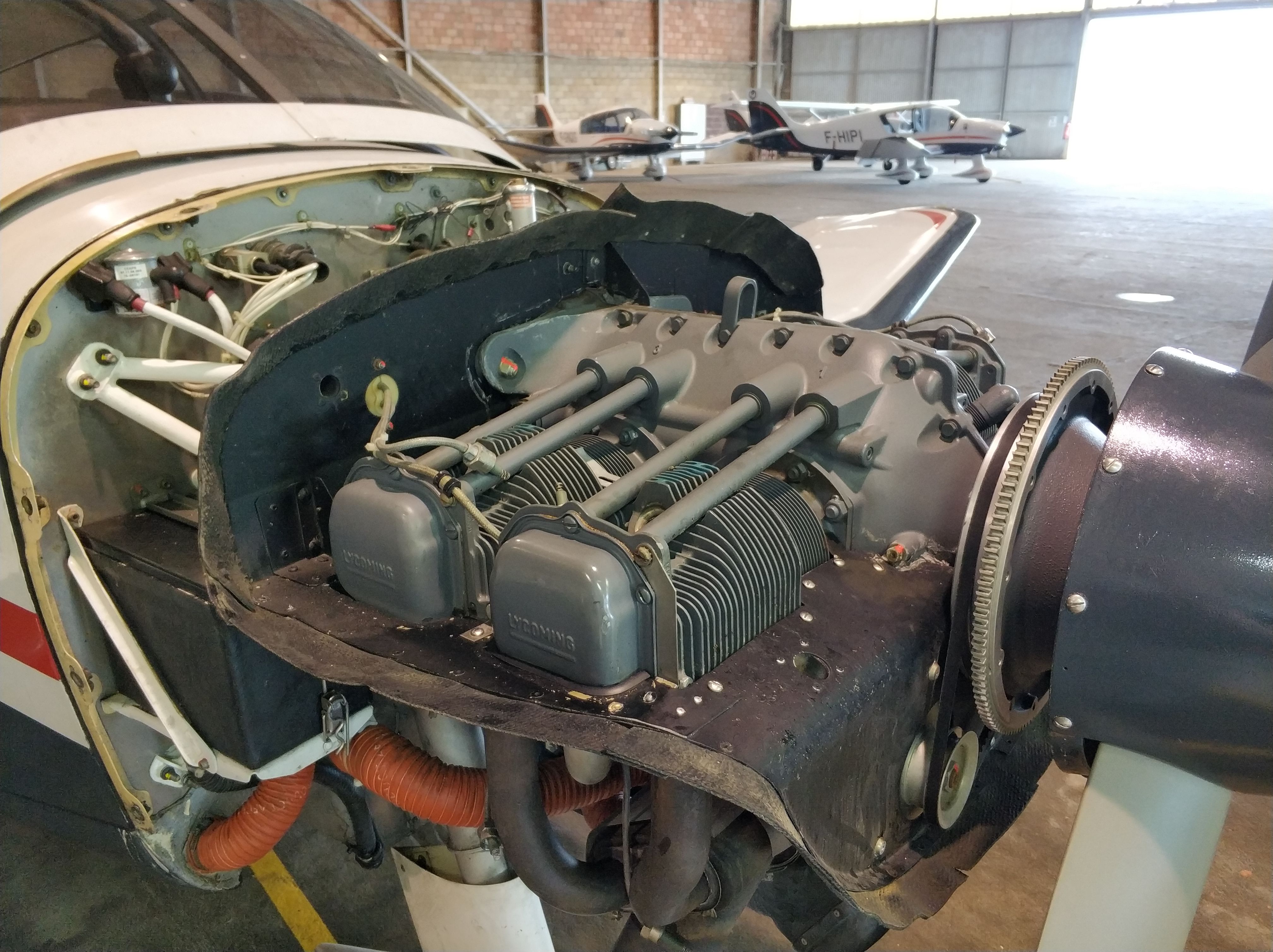
A maintenance requirement, published by the OSAC, requires us to check the heat control valve on the carburetor and the hot air duct. We removed the access panel, inspected it, and reinstalled it. Next, we placed the aircraft on jacks to remove the landing gear wheels. We replaced the tire on the nose wheel and replaced the bearings in the torque link.
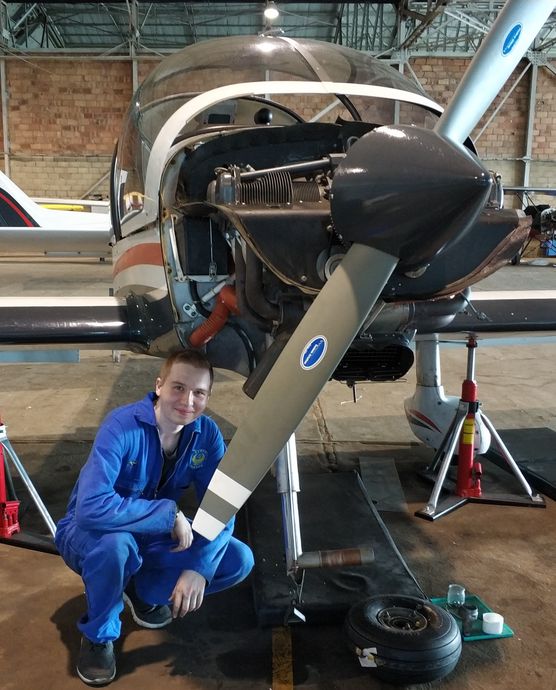
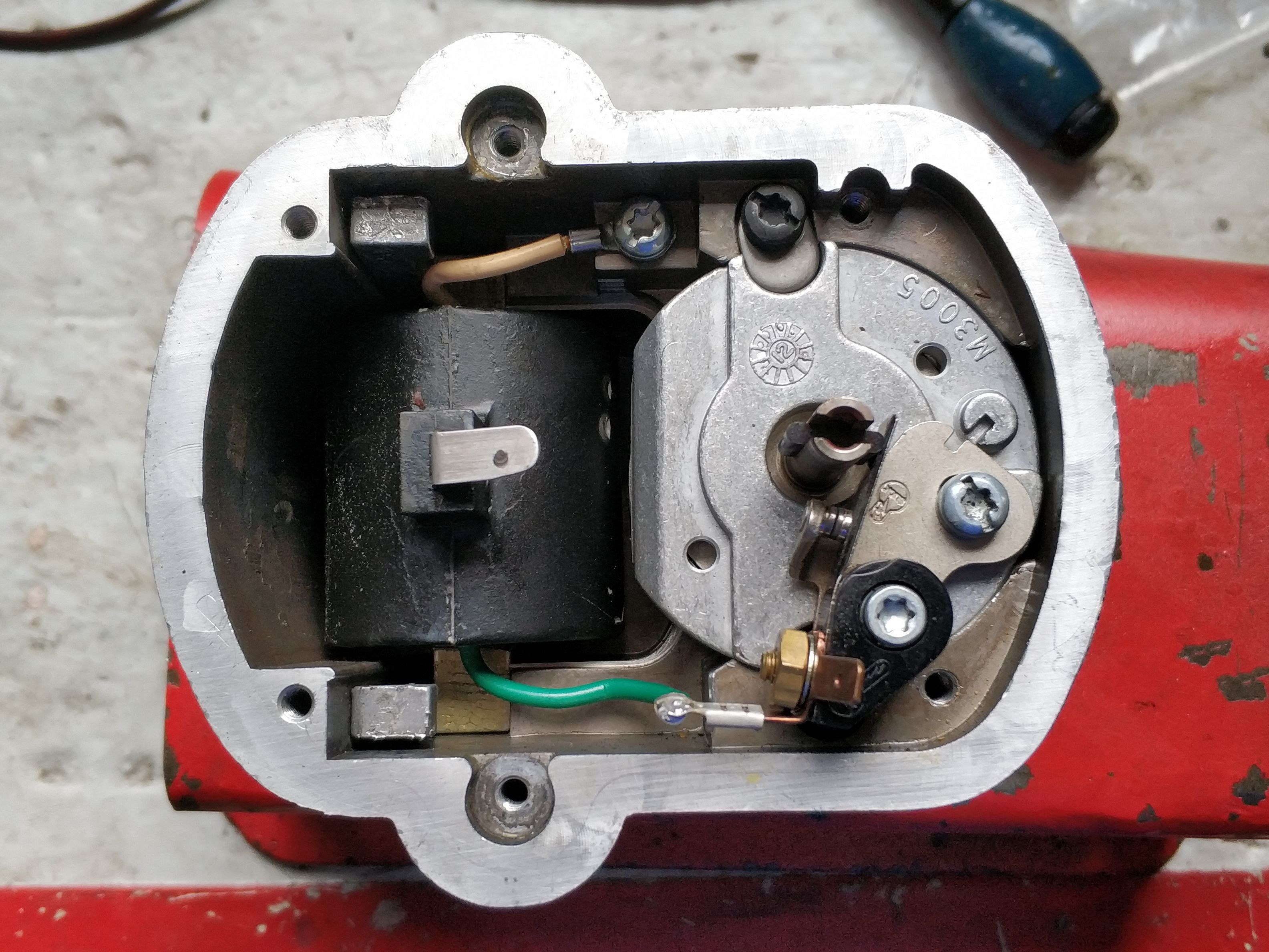
We inflated the shock absorbers to 6 bars, replaced the hoses and brake pads. Inside the cockpit, we replaced the air filters for the vacuum-operated instruments. We checked the tension of the control cables; incorrect tension could lead to an inability to control the aircraft. Then, we moved on to removing the magnetos and disassembling the left one to replace the breaker and its capacitor.
We then locked the magneto and installed it with a 20-degree advance in ignition timing. Using the magneto synchronizer, we adjusted both magnetos so that they provide the spark to the spark plugs simultaneously (each cylinder has two spark plugs).
Before finishing the inspection, a ground check is required. We moved the aircraft out of the hangar. We performed a pre-flight check and boarded the aircraft. The engine started after a few propeller rotations. While the oil temperature was increasing, a violent rainstorm hit the airport. Since the engine was exposed, we returned the aircraft to the hangar.
We resumed testing once the storm had passed. When engaging the left magneto, the engine speed fluctuated by 500 RPM. This indicates a weakness in the coil. We returned to the workshop and replaced the magneto with a new one. After about an hour of work, we resumed testing. This time, everything worked perfectly; there was no more than a 10 RPM difference between the two magnetos.
It’s 22:00 (10:00 PM). We reinstalled the engine cowling. The final checks were completed, and the inspection is finished. The aircraft will fly without issue tomorrow.
I would like to express my sincere gratitude to Yves-Noël, Chief Mechanic of ACRIV, for instructing me on the mechanics of the DR400 and providing valuable advice in preparation for the Hop Tour. These few days have been incredibly enriching; they’ve given me a better understanding of how an airplane’s internal systems work when seen from behind the cockpit.