Flight instruments
The flight instruments provide pilots with essential information for flying, such as speed, altitude, and heading.
Six main instruments are grouped on the dashboard, directly in front of the pilot.
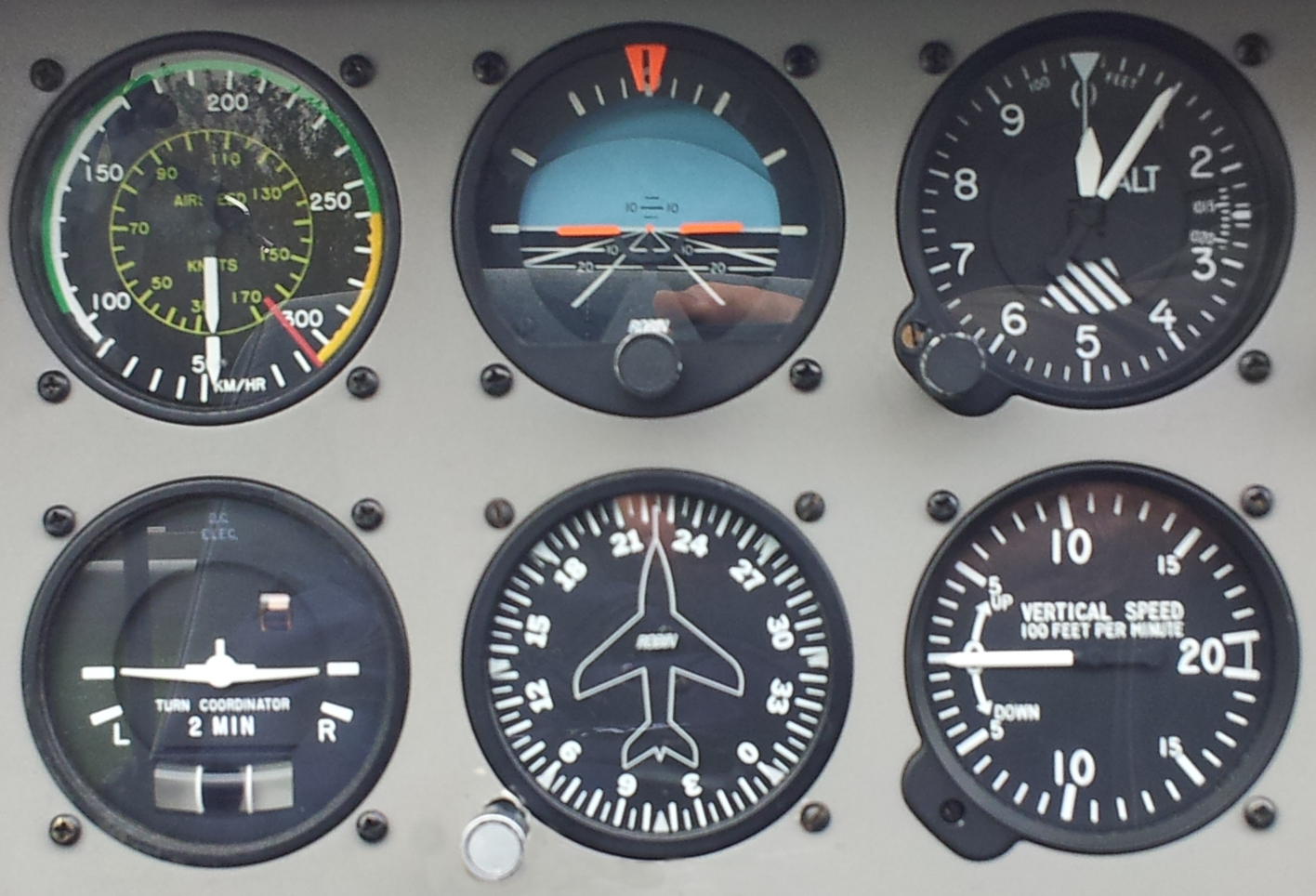
Anemometer
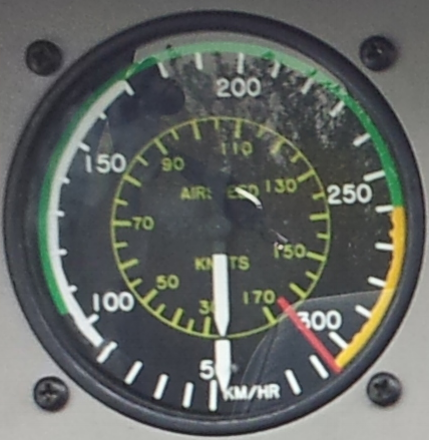
The anemometer, named after its inventor Raoul Badin, indicates the aircraft’s speed relative to the wind, measured by the Pitot tube. The colored arcs represent different speeds depending on the aircraft’s configuration.
- White arc: Range for use with flaps.
- Green arc: Normal operating range.
- Yellow arc: Use prohibited in turbulent air.
- Red line: Speed that must not be exceeded.
The unit of speed is generally knots (as in maritime navigation), but anemometers may also display speed in kilometers per hour or miles per hour.
Artificial Horizon
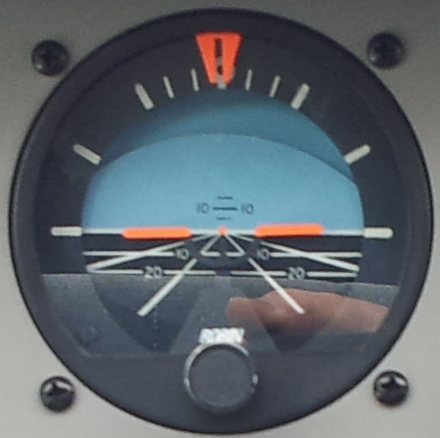
The artificial horizon is a gyroscope that indicates the aircraft’s attitude and inclination. The blue area represents the sky, while the gray area represents the ground. A red model of the aircraft sits in the middle. The red arrow pointing upwards indicates the inclination, which is 0 degrees here. This information is used by the pilot to manage the aircraft’s attitude under instrument flight conditions.
Altimeter
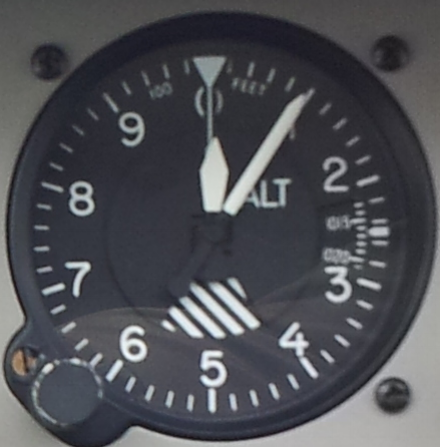
The altimeter indicates altitude in feet, relative to a reference level: sea level, ground level, or a specific flight level. The pilot must adjust the altimeter before and during flight as atmospheric pressure varies to ensure accurate readings.
- QNH: Atmospheric Pressure at Nautical Height (used below 3000 feet).
- QFE: Atmospheric Pressure at Field Elevation (typically the airport elevation), used for aerobatic maneuvers.
- QNE: 1013 hPa - A reference pressure for expressing flight levels in feet.
Turn and Slip Indicator
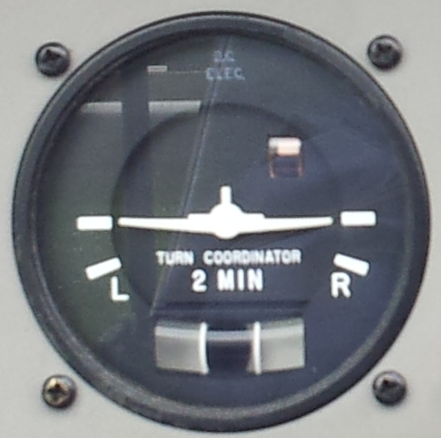
The turn indicator is a gyroscope with a single axis of freedom, indicating whether the aircraft is turning left or right, represented by a model of an aircraft. Unlike the artificial horizon, it indicates the rate of turn rather than inclination. The slip indicator shows whether the aircraft is slipping or sliding during a turn. If the ball is inside the turn, the turn is slipped. If the ball is outside the turn, the turn is slid. The recommended action is to correct the situation using the rudder pedals, following the saying: “Foot chases the ball.”
Heading Indicator
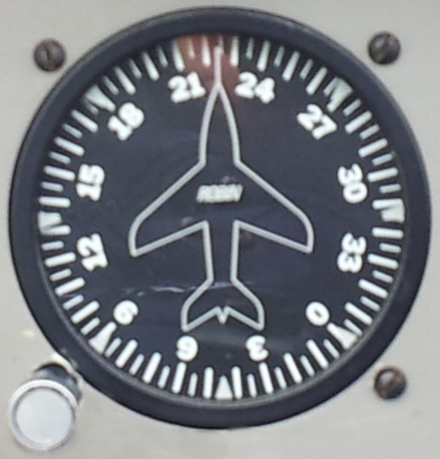
The heading indicator provides a clear reading of the aircraft’s current heading. It is used for navigation by dead reckoning. Composed of a gyroscope, it is sensitive to turns and accelerations that can cause it to drift. The pilot must periodically reset it to the magnetic compass every fifteen minutes.
Variometer
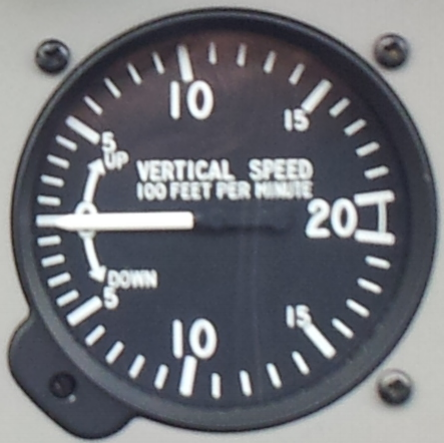
The variometer indicates the rate of climb in feet per minute. It operates using the pressure differential caused by the aircraft’s vertical speed.
In addition to these instruments, the dashboard also features many other gauges, such as VOR and ADF systems, fuel and engine temperature gauges, oil pressure readings, and a tachometer for measuring engine RPM. The pilot must monitor these various instruments while also observing the outside environment!